Chadsworth Columns Used for the Louise S. McGehee School for Girls

2344 St. Charles Avenue — New Orleans, Louisiana


Architect: Jahncke Architects Inc.

Contractor: Crane Builders of New Orleans


“Restoration: the process of returning, as nearly as possible, an existing building to its condition at a particular time in history.  The work may include removing later additions, making hidden repairs and replacing missing details.”                 — Bruce Eggler


The Louise S. McGehee School for Girls was established in 1912.  Almost a century later, Crane Builders, through the direction of Jahncke Architects, was set to the task of restoring the columns on the front of this beautiful historic masterpiece.  Chadsworth was selected to replicate the orginal columns on the structure– columns which would not only pass rigid historical guidelines, but in a synthetic material that would endure many more centuries to come.


Using a filament-wound process, Chadsworth fabricated 18 columns for the school.  10 Ionic (Roman) columns with fluted (Ionic) shafts and Ionic (attic) bases and 8 Corinthian (Roman) columns with fluted (Ionic) shafts with Ionic (attic) bases – all approximately 14″ tapering to 12″ x 14′.


This project was honored by the New Orleans Historic District Commission with an award in restoration.


   To learn more about Chadsworth’s projects, visit us online at

                                     www.ColumnPhotos.com


New Chadsworth Pergola Catalog Available for Download

chadsworth-pergola-catalogChadsworth now offers our custom pergola line in three materials to better accomodate the needs of your specific project.  Depending on the requirements of your job- support beams, rafters, and purlins are available in either PVC, polyurethane, or fiberglass.

Please take a moment to enjoy our new Pergola Catalog (link below) and see just how easy building your own custom pergola can be.  We have gathered a collection of beautiful photographs from some of our satisfied clients and hope this brings you closer to visualizing your new outdoor space.

http://shop.columns.com/images/Custom-Pergola-Brochure.pdf

Chadsworth Incorporated Provides Columns for New Addition at UNCW

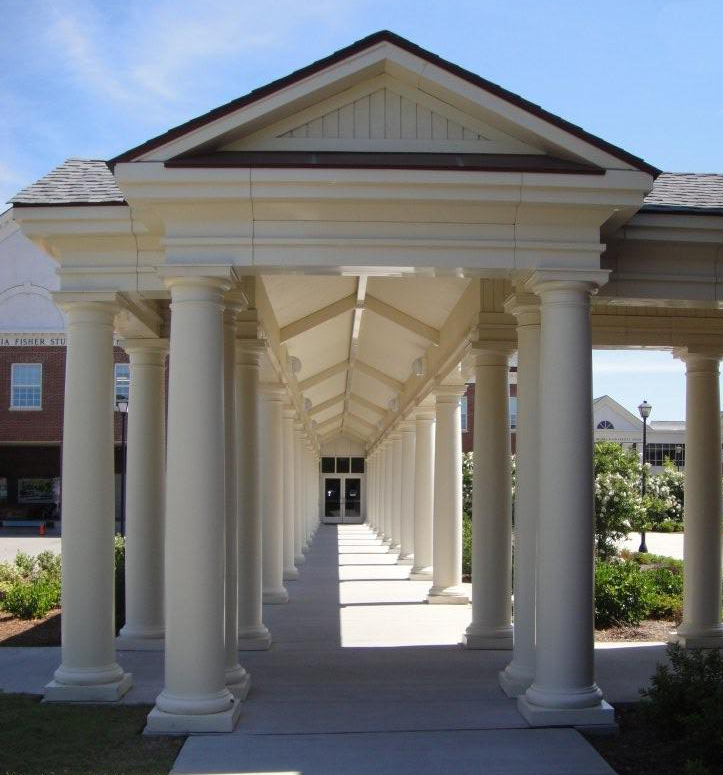
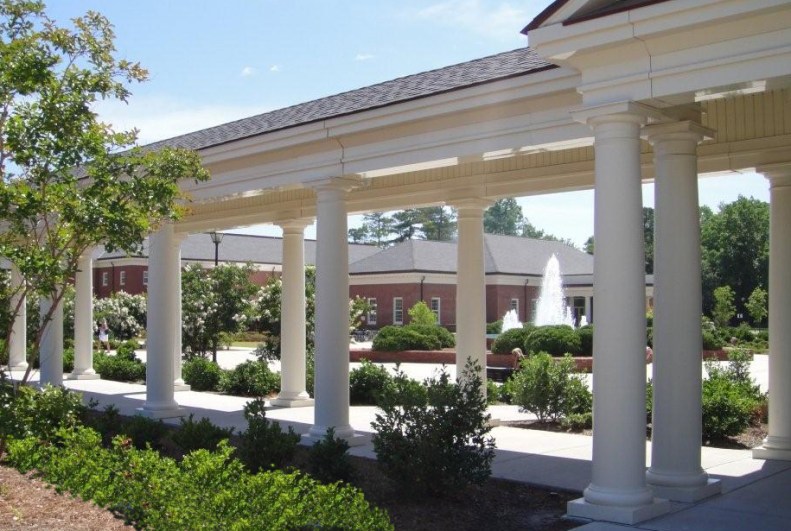
Leading manufacturer/distributor teams up with the UNCW Parents Council to build the Colonnade connecting the Fisher Student Center and the BurneyCenter.

WILMINGTON, N.C., January 29, 2010—The University of North Carolina Wilmington has added a Colonnade that connects the Fisher Student Center and the newly-renovated Burney Center.  Orchestrated by the UNCW Parents Council, the Colonnade is the finishing touch to the council’s aim for a centralized social space.  Adjacent from the University Union, the Colonnade serves as both a campus mark and an outlet for students to dine at the campus café.  The Colonnade was completed in 2006 and features 32 premium Tuscan columns.

Strategically structured in the heart of campus, the Colonnade serves to provide a gathering place for current faculty and students, while establishing a sense of tradition among alumni.  This symbol of excellence was made possible because of the UNCW Parents Council’s generosity and dedication.

The architect for the project was Bill Moser of Moser Mayer Phoenix Associates, which is located in Greensboro, North Carolina, and the contractor was Barnhill Contracting Company, headquartered in Tarboro, North Carolina.

For more than 20 years, Chadsworth Incorporated has understood the aim to aesthetically progress local communities, and, for this, they were both eager and humble to contribute to yet another community endeavor.

Chadsworth Incorporated would, again, like to commend the excellent teamwork exhibited in the creation of the Colonnade.

For more information, please visit their web site, http://www.columns.com/, or call 1.800.486.2118.

For more information about the University of North Carolina – Wilmington, please visit:

www.uncw.edu

UNCW Columns - 21

UNCW Columns - 5

UNCW Columns 61


‘Invoking an Ideal’ — Chadsworth Featured in Architectural Digest

Invoking an Ideal

Romanticized Forms Pay Homage to Southern Architectural Traditions in a Historic Landscape
 
Architecture by Ike Kligerman Barkley/Interior Design by Renée O’Leary
Text by Joseph Giovannini/Photography by Durston Saylor
Published June 2008
In some circles, having multiple personalities may be viewed as a psychological disorder, but in architecture, it can be a good thing.


When the New York firm Ike Kligerman Barkley was commissioned to design a house in the Virginia horse country, several considerations pulled the architects in complex and contradictory directions. Thomas Jefferson, Monticello and the Palladian tradition of plantation houses still weigh heavily on the collective architectural psyche. Yet in the more specific context of the Green Springs Historic District, a protected agricultural landscape, most buildings are modest farmhouses. While the house had to hold its own on a 1,000-acre site within the historic-land trust, it couldn’t overwhelm empty nesters who were retiring from New York to live in a landscape they had no intention of dominating. “We wanted something that would fit in with the area,” says Renée O’Leary, the client, a professional designer who did the interiors. She and her husband had worked previously with the architects on their home in Connecticut (see Architectural Digest, August 1999). 


The land, then, with rolling hills, pasturage, native cedars and a 10-acre lake, looked innocent—and large enough to handle just about anything—but it was actually a multivalent site charged with conflicting expectations. Fitting it into a context polarized between manor and farmhouse meant multiplying its architectural personality. The big house had to be small, underbuilt for a very large piece of land, and it had to be significant yet discreet. “We wanted to do something appropriate, something that would sit lightly on the land,” says Thomas Kligerman, one of the firm’s three partners. The clients needed a horse barn, one that could also shelter the cats and dogs the couple foster. 


“It was the first house of any size in that area since the 1880s, so we felt a lot of pressure to build something worthy of the setting,” says partner-in-charge Joel Barkley, who was born and raised in the South and who seemed to breathe a southern accent into the project. Complicating—and enriching—the task was the ruin of Hawkwood, a pre-Civil War Tuscan-style house designed by the eminent New York architect Alexander Jackson Davis. “It’s just across the road, so there’s a direct visual connection,” Barkley adds. “Since it’s a ruin, there’s a kind of romantic sense here, a nostalgia, that I wanted to pursue.” 

Barkley brought other extrinsic concerns to weigh on the character of the design: “Escaping to the country from city living makes me think of Virgil and his Bucolica,” he says. “I wanted to build on the classical ideal of taking refuge in the pastoral landscape, a civilized retreat that would contrast with the brutal reality of the great heat here and the hard clay soil. I think southern architecture can be so powerful because it’s like a white mirage in a green world.”


The architects were essentially mining the spirit of the place to shape the design, but sensing the subtleties of the land, weather and near and distant history meant that no single form could embody all considerations. Barkley chose several forms rather than one, creating an episodic structure with a narrative instead of casting the building as a single image built at a single point in time. The centerpiece of the house is a stuccoed, templelike entrance pavilion with an august portico of four columns. The roof slopes down to a clapboard appendage, which looks as though it was added by subsequent owners in more humble circumstances. On the other side of the portico, there’s a slightly grander wing with tall, aristocratic, triple-hung windows, which in turn abuts a two-story clapboard building that reads as a farmhouse. The rear side opens to a second-story porch over a gallery paved in brick. An arched porte cochere springs to a pure, pointedly simple two-story, Greek Revival-style structure that recalls small country churches.
 
  
The house may be large at 6,500 square feet, but it is modestly rather than proudly large, and it appears even smaller because the architects have broken the whole into a rambling, charming concatenation of sections expressing different historical periods and social conditions. Barkley purposely made the house unsymmetrical, but he explains that it is composed of “locally symmetrical objects that form a kind of jumble outside any normal hierarchy.” Each segment is only one room deep, without corridors. “I maximized the outside surface area to get lots of windows, breezes, views and sunlight,” he says, noting, “It’s not the cheapest way of building a house.”
 
 
To add more diversity to the diversity, partner John Ike designed the nearby barn as a steeplelike building, inspired by entirely different sources. “We heisted the idea from an early-20th-century architect named Harrie T. Lindeberg, who himself probably took it from English structures,” explains Ike. “We wanted to create a simple, iconic form.”


The stable adds another chapter to the narrative on the property. The geometrically abstract, acutely triangular structure houses the tack and feed rooms and 28 stalls for Renee O’Leary’s horses, as well as a spiral staircase that leads up to an apartment for the groom, in the gable, where there’s a steep, 60-degree pitch. The architect ties the barn visually to the main house via the standing-seam Galvalume roof and the spanking-white paint.


Despite the ramble of exterior shapes in the main house, its interior flows with ease and logic. A tall, impressive entrance hall with a black-and-white checkerboard marble floor leads straight onto a library centered on a dignified escutcheon of white molding celebrating the view through a tall window. To the left lies the master suite and to the right the living room, with the dining room beyond. All the public rooms, along with the master suite, are on the first floor. The other three bedrooms are on the second floor. When the couple have no guests, it’s basically a one-bedroom house on the first floor.


“In every job I do, I try to think of three adjectives to describe my intentions, and here they were stylish, comfortable and authentic,” says O’Leary. She stressed comfort and informality because the couple keep the doors wide open 10 months of the year, and the free-range dogs drop by on casual visits and roam through the house. In this historical context of Virginia, you have to look twice to realize that the designer cuts the edge with contemporary pieces, such as the dining table with a plaster top and a patinated-steel base. Despite the traditional chairs, the lines overall are clean and softly up to date, eased by natural materials.


 O’Leary characterizes the style as “warm modern,” and her palette—pumpkin in the living room, Clydesdale brown in the library and eucalyptus in the dining room—indeed warms the interior. “Once we realized the outside was going to have columns, that it’d be a white house with black trim, I knew we’d have a lot of color inside,” she explains. “I was interested in the contrast.”


In addition to the multiple architectural personalities, there were the multiple design voices working in concert from the beginning. “We picked our focal points and tried not to have too many things to look at,” adds O’Leary. “I asked Joel whether he designed from the outside in or the inside out, and he said that it all came up together. That’s how we did the whole house. The exterior, interior and the décor all came up together.”


 [cincopa 10689565]


Traditional Building Magazine Recognizes Chadsworth

By:  Nicole V. Gagné

Doric, Tuscan, Ionic, Corinthian, Composite. The Classical orders of columns have been enshrined in architectural design since the days of ancient Greece, although their use can be traced back even further, to the Egyptian architect Imhotep in 2600 B.C., who had the surfaces of stone columns carved to resemble bundled reeds, and beyond. The grandeur, solidity and beauty of columns have been design fundamentals throughout human history, and they show no signs of fading in the 21st century, least of all in commercial and institutional settings.


The revival of Classicism as an architectural language has meant a resurgence and revitalization in the manufacture of columns. For this survey article, we’ve set aside the vast topic of wood columns and narrowed our focus to suppliers of exterior columns in stone, cast stone, fiberglass and other composites. These firms produce columns in all orders; note too that all are manufacturers and remain uninvolved in column installation. What follows is an outline of five leading companies and the unique products they offer . . .


. . .  “We have a lot of custom capability, but it’s a smaller percentage, I’d guess maybe 15 percent.” Jeffrey L. Davis, CEO of Chadsworth, has experienced greater variety in the market. “We’re moving into our third decade now, and it’s fluctuated over the years,” he says. “When interest rates are low and the construction market is on a rise, we sell more of the standard mass-produced columns. When the economy is in a downturn, projects with higher budgets come around and we do more custom work.”


Cost is clearly the major consideration in the popularity of standard-design columns. “If your project calls for a custom profile but wood is not an option, we can create a new PolyStone mold to your exact specifications, giving you the desired profile with all the benefits of the material,” says Davis. “Keep in mind that creating these custom molds is costly, anywhere from $10,000 to $30,000, depending on the size and design required. This is in addition to the subsequent unit cost. If it’s a large job, say, 30 units, the price will be spread out among each column and may indeed be cost effective. On the other hand, if you can incorporate one of our stock products into your project, your bottom line will be much lower . . . “


. . . Chadsworth takes pride in its innovations in column manufacture. “We have four different kinds of fiberglass columns–filament wound, resin infused, chopped or sprayed up and spun cast,” says Davis. “Filament-wound columns are great when you need a load-bearing capacity. When you touch them or rap on them, however, they sound hollow, so what I like to do with those is fill them up with sand or a sand-vermiculite mixture. You think of a column as holding up a lot of weight, so you don’t want it to sound as if it couldn’t hold up anything. The true innovation would be the PolyStone, or spun-cast, column. We developed this line back in 1992, the result of many years of research and development, and it can hold detail a lot better and feels a lot thicker.”


Chadsworth’s fiberglass columns, according to Davis, are used mostly in new construction. “But we also do a big business in replacing wood columns,” he says. “People don’t understand that a wood column must be maintained, and when they buy an old house and it has a rotting wood column, the first thing they think is, ‘I don’t want to have that happen again,’ so they replace it with an FRP column . . .”


Visitors to the Poland Branch Library in Poland, OH, are greeted by Colossal Greek Doric columns from Chadsworth Inc. These imposing columns, fabricated in fiberglass, were made with a filament-winding process that comes from the fabrication of rocket and missile cases. Photo: courtesy of Chadsworth Inc.