Chadsworth’s Columns Shown in Elizabeth Locke’s Jewelry Store

Credits:  From the New York Social Diary

                Written By:  Carol Joynt


           http://www.newyorksocialdiary.com/node/1903513


This is what happens in Washington when the calendar begins to move toward autumn:  we think of Virginia, especially the verdant Piedmont region, which stretches from nearby Leesburg down to practically the North Carolina border, with the Blue Ridge to the West and the Potomac to the east.  Within these boundaries are sprawling estates, fox hunts, cattle ranches, vineyards, an evolving colony of artists, trees bearing a dozen or more varieties of apples and pears; abundant good food and a ravishing palette of autumn color.  There’s also, I learned over Labor Day weekend, the lure of luxury – in particular, world class jewelry.


Manhattanites may claim jewelry designer Elizabeth Locke as theirs, but the truth is the lovely pieces she sells on Madison Avenue – and in stores from Charleston to Beverly Hills – are conceived and designed at practically the banks of the languorous Shenandoah River.  All within a few miles of each other are her home in Millwood and her company headquarters in Boyce.  To say it’s a one stoplight rural area is an understatement.  We’re talking one stop sign and a railroad track.


While Elizabeth is a native of the area, which is hard-core hunt country, and her local clients and friends are the landed gentry, her designs are not gold stirrup earrings and horse head pins.  Oh, no.  These are sophisticated baubles for a lux lifestyle:  gems, precious stones, glass intaglios, ancient Roman and Greek coins, South Sea pearls, antique mosaics and lots of gleaming yellow gold.  They reflect the sensibility of Elizabeth, who is, above all, a passport-wielding citizen of the world.


Still, home is where the heart is and for Elizabeth and husband John Staelin their 19th century “farmhouse,” Clay Hill, is another beloved work of art, one they just lavished with a complete upgrade and redo. Anybody who’s ever renovated a house knows completion of the project is a moment for celebration (after months of threatening murder and contemplating suicide).


For Elizabeth and John the job’s end was reason to pitch a big tent, hire a caterer and dance band, and toss a swell party for more than 100 friends.  An added bonus was that it occurred on one of the more spectacular days of the summer, with dry and cool air, and a painter’s sunset.


Elizabeth invited me when she learned I would be a houseguest of our mutual friend Jean Perin who, along with Alison Martin, did the interior makeover of Clay Hill. My friendship with Jeannie dates from the early 80s, when I lived in Upperville and she lived outside Middleburg.


Over the years I relocated to Georgetown and Jeannie settled in Upperville, where she created one of Virginia’s most exquisite mini-estates.  Not only is she a gifted interior designer, but also she makes poetry with landscaping.  Garden groups come from all over to admire Les Jardins de Jean Perin.  It’s a treat to be her houseguest.  Each morning I woke to a view that was a landscape painting.

Given the holiday it was surprisingly easy to get out of the city Friday.  I arrived in time for an afternoon swim and a chance to savor twilight, a quiet intruded upon only by birds, frogs and crickets.  A family of deer romped across the field.


Jeannie is Bunny Mellon’s next door neighbor, though in this part of the world “next door” can mean separated by dozens of acres, even hundreds.  Her many beautiful views include the Mellon jet landing strip, designed to accommodate the latest Gulf Stream.  Only in the land of Mellon could a private airfield be considered beautiful; even the trees are so artfully tended they define well pruned.


In advance of the Clay Hill party Jeannie had some plans for us, but first thing Saturday morning she said, “you must go to see Elizabeth’s store in Boyce.”  Good advice.


It’s a sweet town but completely rural and the last place one expects to find a high-end jewelry emporium that’s done up like an Italian palazzo, but that’s what I found, complete with columns, a hand-painted faux-marble floor, swaths of gold silk, an elaborate ceiling and cases of precious gems.


Bit of the décor are loopy due to a side story Elizabeth created of an imaginary twin sister who is a wayward Contessa, thus the haute invitations tacked to the mirror in the faux bathroom, an alluring boudoir and a shrine to Elvis.  If you arrive minus appropriate clothing, never fear; the shop sells stylish caftans that go well with palazzos, gold and gems.


The store is open on weekends.  It’s less than a half hour from Middleburg and a 70-minute drive from Washington, but loyal customers have been known to fly in private to do their shopping.


Nearby in Millwood is the Locke Store (same name but no relation) where I stopped both coming and going, because the peanut butter chocolate chip cookies were that good.  They have other well made prepared foods, including potpie, meat loaf, chicken salad, assorted sandwiches, apple crisp; also wine, beer sodas and coffee.  Carry your food across the street for a picnic by the cascading race of the restored 18th Century Burwell-Morgan Mill.  That would be a perfect autumn day – history, jewels and a picnic . . .


Hooked On Chadsworth Cottage

Chadsworth’s Columns linked to Terry Kearns’ blog — Architecture Tourist!

http://architecturetourist.blogspot.com/2009/03/julia-over-at-hooked-on-houses-is.html

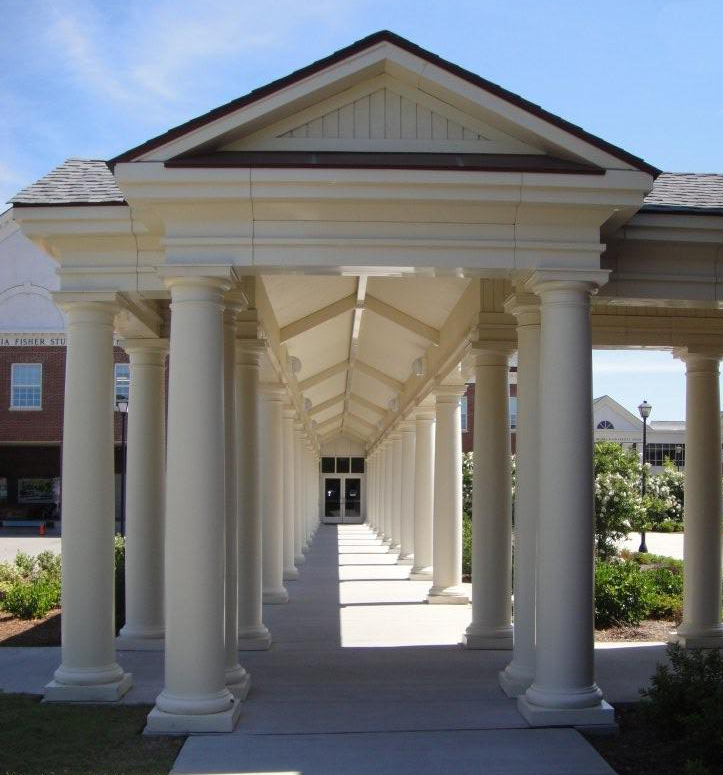
Chadsworth Incorporated Provides Columns for New Addition at UNCW

Leading manufacturer/distributor teams up with the UNCW Parents Council to build the Colonnade connecting the Fisher Student Center and the BurneyCenter.

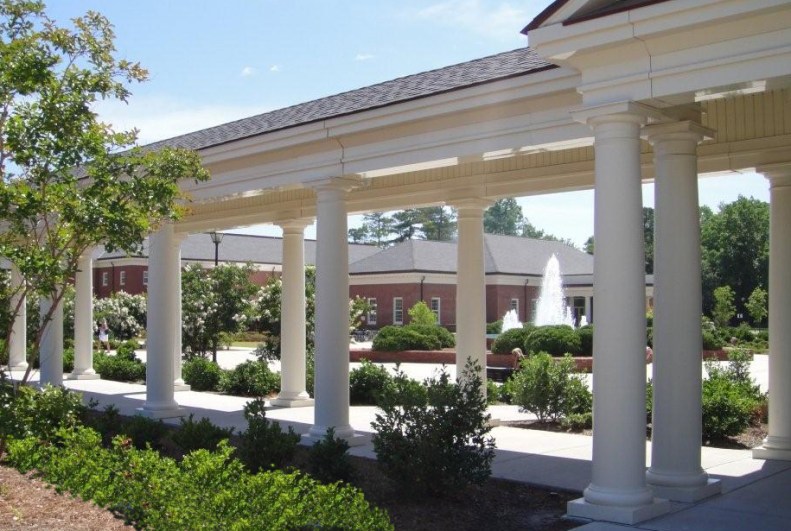
WILMINGTON, N.C., January 29, 2010—The University of North Carolina Wilmington has added a Colonnade that connects the Fisher Student Center and the newly-renovated Burney Center.  Orchestrated by the UNCW Parents Council, the Colonnade is the finishing touch to the council’s aim for a centralized social space.  Adjacent from the University Union, the Colonnade serves as both a campus mark and an outlet for students to dine at the campus café.  The Colonnade was completed in 2006 and features 32 premium Tuscan columns.

Strategically structured in the heart of campus, the Colonnade serves to provide a gathering place for current faculty and students, while establishing a sense of tradition among alumni.  This symbol of excellence was made possible because of the UNCW Parents Council’s generosity and dedication.

The architect for the project was Bill Moser of Moser Mayer Phoenix Associates, which is located in Greensboro, North Carolina, and the contractor was Barnhill Contracting Company, headquartered in Tarboro, North Carolina.

For more than 20 years, Chadsworth Incorporated has understood the aim to aesthetically progress local communities, and, for this, they were both eager and humble to contribute to yet another community endeavor.

Chadsworth Incorporated would, again, like to commend the excellent teamwork exhibited in the creation of the Colonnade.

For more information, please visit their web site, http://www.columns.com/, or call 1.800.486.2118.

For more information about the University of North Carolina – Wilmington, please visit:

www.uncw.edu

UNCW Columns - 21

UNCW Columns - 5

UNCW Columns 61


Chadsworth Columns Goes Green with Premium Lyptus® Columns

Chadsworth Columns Goes Green with Premium Lyptus® Columns

Leading manufacturer / distributor unveils Brazilian hardwood pillars that save money and the environment.

 
WILMINGTON, N.C., July 13, 2009— For more than 20 years, Chadsworth Incorporated (http://www.columns.com/) has come to stand for quality, craftsmanship and integrity of design. And now, the global manufacturer and distributor of columns and related architectural products is at a new level of commitment with the unveiling of premium Lyptus® columns, an eco-friendly product that’s an affordable alternative to cherry, jatoba, hickory or mahogany.


“When it comes to our industry and its role in environmental sustainability, Chadsworth strives to be part of the solution,” says Jeffery L. Davis, founder and designer of Chadsworth Incorporated. “Lyptus® is a perfect example of innovation at its best, and we’re honored to offer this to customers. Every day, we hear requests for green products. We’re responding with a new hardwood column, made by a renewable resource that simultaneously meets our standards of quality, design and even price. Given what’s happening to rainforests around the globe, this is not only exciting but important and timely.”


Lyptus® is a naturally occurring hybrid of Eucalyptus grandis and E. urophylla. It’s planted and grown among reintroduced native species on plantation-style, managed forests in Brazil. It takes only 14 to 16 years to harvest the trees, compared to the 30 years it takes for other hardwoods to mature. These crop characteristics ensure a consistent quality and supply, keeping prices competitive with other premium hardwoods.


Once harvested, Lyptus® demonstrates excellent workability, machining properties, density, finish tolerance and strength. That means it’s ideal for columns and the very reason why Chadsworth has proudly adopted this cutting-edge hardwood into its product line.  Available in stain grade, solid board, Chadsworth’s Lyptus® column shafts and staves come in most standard sizes.


“What’s particularly noteworthy about Lyptus® is that it fits most building and architectural specifications, so it’s an easy, durable fit,” Davis says. “We’ll explain product details with our customers, but we expect people to be pleased with just how simple it will be to incorporate this eco-friendly hardwood into their plans.”


Columns are provided unassembled, sanded only. Freight charges are additional although discounts apply for orders over four pieces.  For more information, visit www.columns.com or call 800-486-2118.


Home of Distinction: Romancing the Cottage

PRESENTED IN WRIGHTSVILLE BEACH MAGAZINE

by Marimar McNaughton

The earth is round, but the world is full of seductive edges and remote corners where man wrestles the odds of nature to carve a niche for himself, on distant seaside islands steeped in privacy, where his true visionary genius may come to repose.

Chadsworth, a cottage on the extreme north end of Figure Eight Island, on a site, which the owner says, was at one time heavily treed with live oaks ravaged by hurricanes, is one of those rare private villas where a world traveler retreats behind the façade of an Anglicized Palladian mansion embedded into the fragile barrier island landscape.  The landmark dwelling is at once a prominent navigational aid for mariners traveling the Atlantic and a soft landing for homeowner Jeffrey Davis.

Chiseled from classic architectural styles passed down through the ages, Chadsworth’s exterior represents Davis’ lifelong fascination with Greek and Roman forms, from which he has fashioned a thriving enterprise as a designer and manufacturer of classic columns – a profession and a passion that sends him around the world.

He returns to eastern North Carolina, where he has longstanding family ties and fond memories, to unpack his bags in a home framed by formal highbrow lines, charmed by vernacular coastal Carolina traditions.

“It’s comfortable, it’s traditional, it fits my personality,” Davis says.

The centerpiece of his home is a collection of antiques handpicked during continental and global forages.

“The furniture that I’ve been collecting for over 20 years is all from the early 1800s, whether it be Biedermeier, or First Empire, New York or Regency . . . I collect these things,” Davis says.  “I wanted that period and that type of furniture, and I think that was a starting point.”

The challenge was how to create a context for the furniture in a beach cottage setting.

“I like to live with my antiques.  There’s nothing in here that you can’t sit on, you can’t touch, you can’t do something with.  My dogs jump on every single thing in the house, kids do too,” Davis says.

When it was time to design his permanent home, Davis recruited a trusted colleague, Christine G.H. Franck, who, like Davis himself, sits on the board of the Institute of Classical Architecture & Classical America.  With a combined 25 years of tenure, the pair teams up with other design professionals, working tirelessly, teaching and traveling, to spread the mission of the institute, which is dedicated to advancing the practice and appreciation of the classical tradition in architecture and allied arts.  Franck, for her design work on Chadsworth Cottage, also received a coveted 2007 Palladio Award, named in honor of Renaissance architect, Andrea Palladio, for her outstanding work in traditional design.

“One of the things that we were faced with early on was the parameters of building here,” says Franck.  “The fact that we had to elevate the first floor as high as we did to 13.5 feet finish flood elevation . . .given that, we then looked at all the different options.”

Those options were Palladian villas, English villas and American Federal houses that Franck says are based on Roman precedents, elevated on a high base.

“We made that decision fairly early on, so that the overall design direction for the house was going to be in this Anglo-Palladian tradition,” Franck says.

“Jeff was also very clear about wanting the house to have a sense of character and place to eastern North Carolina.  He didn’t want it to look like it should be anywhere other than her,” she adds.

The bows to eastern North Carolina can be found in the details, like distinctive black shutters and window sashes derived from tar-based glazing compounds used in coastal settings to prevent rot.  Corner pilasters, vented soffits, blue porch ceilings, figurative “bundled wheat” balcony spindles and the interior stair hall were borrowed from historic sites in nearby New Bern.

Franck’s brilliant design blends formal and informal interiors that reiterate Davis’ love of symmetry and balances his gregarious lifestyle with a need for solitude – entertaining as many as 300 guests on the lawn, hosting intimate family gathering at holiday time or private dinner parties in the grand hall and the dining room, or retreating to his singularly quiet balcony, where he looks over the Rich’s Inlet sand spit, and idyllic windswept vista – savannah, white sand and feisty surf.

Very public spaces, like outdoor showers, and very private places are stacked within the footprint of the three-story, three-bedroom, three-bath home from the ground level to the attic dormer windows that crown the hipped roof.

Supported by load-bearing columns, representing the lowest to the highest orders of classical architecture, incorporated into the fabric of the house, both the interior and exterior column forms rise with each successive function.

“The classical orders have a hierarchy to them,” Franck explains.

“The Tuscan order on the porch columns is a strong order, and it gives this house the sense that it’s projecting strength out over the water.  The (interior) Ionic capitals downstairs are from the Erechtheum, which is a small building on the Acropolis.  The Corinthian order is the highest of the orders, if you will,” she says, admitting that there are at least three schools of thought that define classic columns and their origins, spurring much debate historically.  Undisputedly, the Corinthian columns in Davis’ master suite were inspired by the Tower of the Winds from Athens, Greece.

“The Tower of the Winds capital and the Tower of the Winds border that you see in here is what started my company,” Davis says.  “It’s the first column that I actually built . . . and it’s the column that built this house, literally.”

“Sometimes I think it’s important to create a fiction, if you will, for a house,” Franck says.  The fictionalized story she weaves of someone who lived along the Carolina coast, who might have been involved in the trade industry, who brought back some tiles from Holland, picked up a cane chaise in India, a First Empire day bed from one of Napoleon’s castles, an 1832 Biedermeier dining table from Austria and a writing desk from Germany, and brought them home to his island retreat, is not far-flung from the truth.

To lighten the intensity of the antiquities and the treasures, Davis and Franck collaborated on a window treatment used throughout the house, combining wooden plantation blinds with sheer, diaphanous drapes.

“Part of what we were going for,” Franck says, “was this kind of Caribbean . . . almost trade-oriented house . . . where you get the blinds, you get the breeze coming through the windows, you get the slats of light . . . a lot of this is to downplay the formality of the furniture and to make it a comfortable light, air-flowing house and place to be in.”

Embellishing that fiction is the Chadsworth name.  Davis says, “I wanted a name that sounded old, as if we’d been in business for hundreds of years.”

From the north end of Figure Eight Island, the visionary genius gazes out to sea.

“I love this porch out here.  The columns, and the view, it’s absolutely gorgeous,” he says.  Chadsworth, his cottage, appears as if it had always been there, his homeplace for hundreds of years.