CREDITS: From the ICA&CA’s Fall Newsletter – Interview By Clem Labine
In 1992, when the ICA held its first summer program at the New York Academy of Art, a young column manufacturer was one of the students. Several years later, Jeffrey Davis, founder and president of Chadsworths 1-800-Columns, became a member of the Institutes first board of directors along with Clem Labine, who was profiled in the 2009 Spring/Summer issue of The Forum. They served together on the ICA&CA board as the organization was in its grassroots beginnings so we knew they would have a unique perspective on both the building industry and the ICA&CA today.
CL: A lot of us think of you as Mr. Columns. How did you get into the column business in the first place?
JD: Initially, I dreamed of being in politics. I had a solid liberal arts education with a focus on political science. But I found the game of politics disillusioning. So I moved on to the corporate world with the goal to create and build a successful company in the column market.
CL: Where does the name Chadsworth come from?
JD: I was impressed by the beautiful English estate, Chatsworth. The name evoked the sense of quality I wanted, but I replaced the t with a d to stand for my last name.
CL: As I recall, you were a student at one of the early ICA summer programs. What was it like?
JD: I was a student in the very first (1992) ICA six week-long summer program. The instructors included Richard Cameron, Richard Sammons, and Don Rattner. I had been running Chadsworths for several years by then. The program taught me so much about the language of classical architecture, but I also learned that classical design isnt just one simple, set formula. I remember, too, all the fun times we had in the blistering heat of a New York summer: Our classroom wasnt air conditioned!
CL: Did that ICA program have much impact on your business?
JD: The impact was substantial. Id learned at the ICA that what was on the market at the time was not classical at all. In order to save money, manufacturers commonly reduced the height and projection of the plinth and base, so when we developed the first mass-produced FRP columns I didnt just replicate the typical wood stock column. I explained to my production people that with FRP it should cost no more to make a classically correct column. I made a pattern of a classical Tuscan column and this was the beginning of our PolyStone® columns for which, in 2000, Chadsworths won an industry award for best new product.
CL: So you were really the pioneer of architecturally correct FRP columns?
JD: Yes! And in addition to the base moldings, we worked on getting the astragal correctly proportioned, well defined, and with the apophyge curving from the shaft to the fillet. Some companies produced columns with astragals so ill-proportioned that they projected like flying saucers; others made astragals with no clear definition of the molding shapes. I take a lot of pride in having pushed the stock column industry into better design.
CL: Over the past 10 years have you seen any change in your average customers level of sophistication about classical detailing?
JD: When it comes to the average consumer, no. I still spend much of my time educating first-time buyers on proportion, design, and proper use. But I enjoy that part of my job the most. Design professionals, however, are more knowledgeable than they used to be due to the growth of the classical movement.
CL: What is the most challenging aspect of the column business today?
JD: My biggest frustration is when architects specify our columns, but the local lumberyard supplies a cheaper product without anyone realizing it until it is too late and the architect ends up disappointed. So weve been developing ways to make it easier for architects to get what they specify. For example, in addition to manufacturing and distributing our own columns, weve added other major column suppliers such as Hartman Sanders, Crown, Dixie Pacific, and HB&G.
CL: Has the internet helped you?
JD: Weve been adding detailed specification and educational information online, which we hope makes the design and spec process easier. In developing our online store, weve also added complementary products such as Focal Point moldings, Life-Time Millwork, and Atlantic Shutters. Of course, price is a challenge. Ive wanted to develop a low-price guarantee, but lumberyards will almost always find out our price and then undercut it.
CL: Im curious: What are the biggest columns Chadsworths has ever supplied?
JD: Believe it or not, for a project in Kuwait, we furnished wood columns that were 30 feet high and 48 inches in diameter.
CL: Are there things about classical columns that youre still learning today?
JD: I continue to be astonished by the variety within classical architecture. On a recent trip to Rome I spent time sketching and measuring different column bases and capitals, amazed as ever by the inventiveness of classical architects through the ages. Im always working to improve stock columns, such as the way the shaft and base join.
CL: Some years ago, you relocated your business and residence from Atlanta to North Carolina. What inspired the move?
JD: When we were in Atlanta, I also had an accounting office in Goldsboro, North Carolina. My parents were running that office, but I spent a lot of time traveling between the two cities. Moreover, my staff was at a point where they wanted to raise families and I wanted to be closer to my parents. So I asked everyone in the company to look at different cities and list their top three. In the end, we chose Wilmington, North Carolina, for its quality of life. My staff has enjoyed it, and Ive been able to care for my parents and raise my two nephews through their teenage years.
CL: I understand you recently built a home on Figure Eight Island off the North Carolina coast.
JD: My original thought was just a simple poured-concrete box. But, of course, things soon got more complicated. Building on a barrier island isnt easy! With a local engineer, I drew up a rough design for a 40-foot cubic house with four columns on the ocean side. I chose to put architectural emphasis on the water side because I had a vision of boats on the Intracoastal Waterway gazing at this villa rising from the sand.
CL: Wasnt fellow board member Christine Franck involved with the project?
JD: When I realized I wanted a classical villa, I knew the details would be critical and that Id need a skilled classical designer like Christine. Christine and I looked at a lot of Federal and Greek Revival homes for inspiration. But in the end, what made the most sense was a type of palladian villa with a Roman temple front and high base. The high base was dictated by the local building code, which specifies that water-front homes must have a raised first floor with breakaway construction below.
CL: Is this a year-round residence?
JD: I did not expect it to be I enjoy traveling and I also have homes in Atlanta on Lake Lanier and in the mountains, as well as a small maison de poupée in France but Chadworth Cottage turned out to be home-base year-round.
CL: What do you like best about living in Chadsworth Cottage?
JD: I have complete privacy, yet the house never feels overwhelming. The room layout allows me to feel connected to the entire house even when home alone. My favorite features of the house are probably the Tower of the Winds mantel Christine designed for me and the various secret doors and hidden storage. Quite honestly, the house succeeds beyond my expectations! From the time I wake up to the time I go to bed, it is a beautiful, peaceful place to be. Christine visits often, as do family and friends. The house is usually full of folks, as well as my three dogs!
CL: Living on a barrier island as you do, have you had any scares from hurricanes?
JD: Hurricanes and noreasters are part of living on the Carolina coast. I rode out Ophelia in the cottage and it was remarkable. We deliberately over-engineered the structure of the house so even with gale winds blowing, from inside the house you couldnt tell there was a hurricane. Aside from that major precaution, before every storm we just close the shutters and move furniture inside.
CL: Youve been involved with the Institute since the beginning. What changes have you seen?
JD: Weve grown from an all-volunteer operation to having a dedicated board and a loyal and hard- working staff. Programs have expanded from that one six-week program to the broad range of national programs we have today. Even with all of those changes, though, one thing that hasnt changed is the valuable friendships that I and others continue to make through the Institute.
CL: As one of its earliest board members, has the Institute lived up to your expectations?
JD: The Institute has exceeded anything I dreamed it would be. I certainly hope it continues to ex- pand its role in promoting the ideals of classicism and teaching the principles of classical design. I hope its mission continues to improve the quality of architecture throughout the industry from design, to manufacturing, to construction.
CL: You are active in many non-profit and charitable organizations besides the ICA&CA. Is there one thats particularly close to your heart?
JD: Closest to my heart is Meals on Wheels. Ive been involved since I lived in Atlanta. Ive also been on the board of the International Network of Traditional Building, Architecture, and Urbanism (INTBAU), the brainchild of archi-tect Bob Adam. Through INTBAU, I have been gratified to see ICA&CAs work in the United States expand worldwide.
Clem Labine


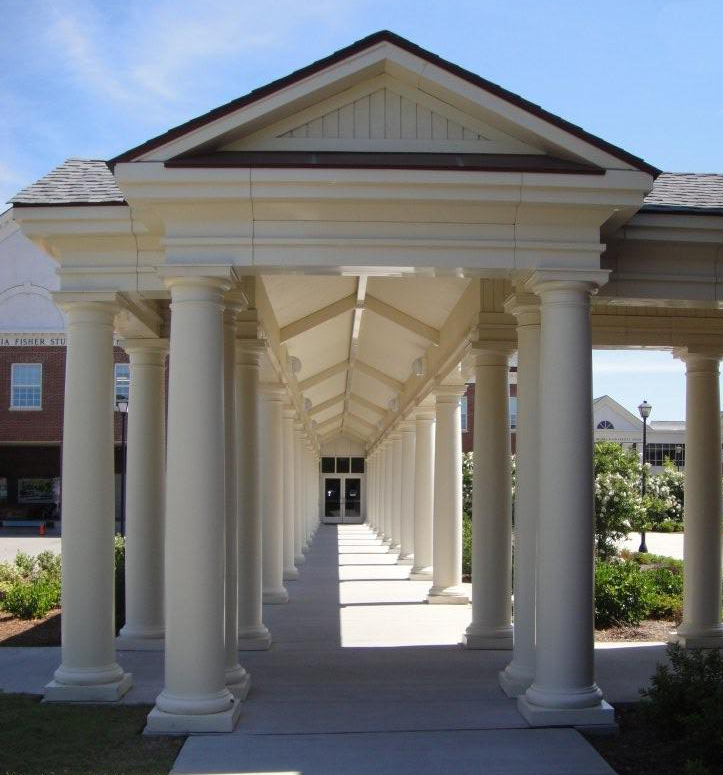

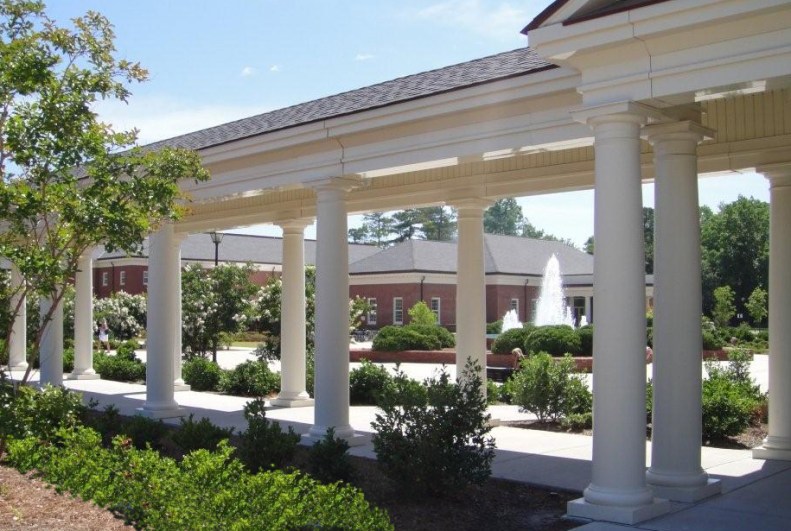


 Chadsworth's 1.800.COLUMNS